
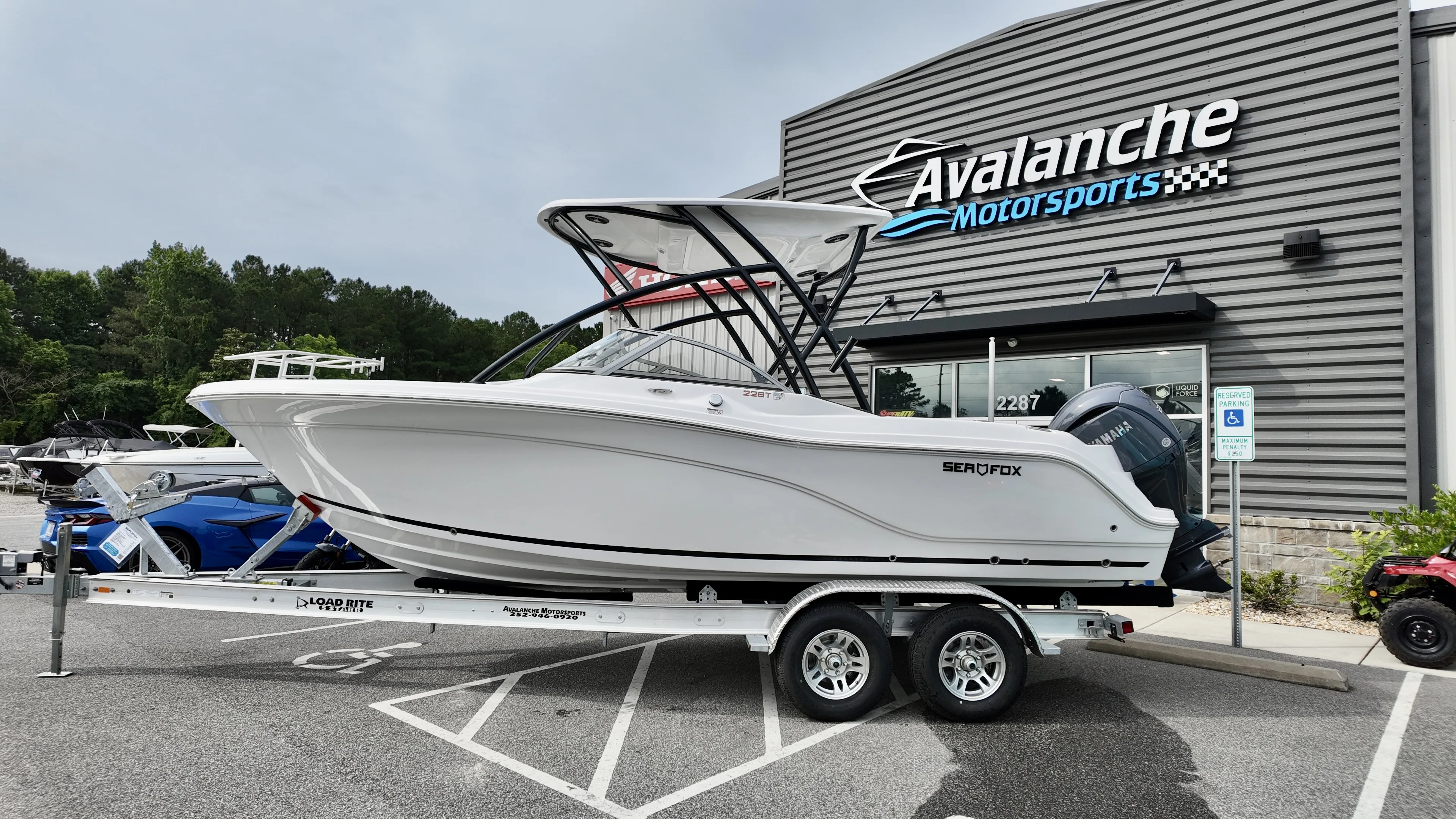
~$80,000 MSRP*Estimated MSRP
Sea Fox vs. Cobia · Honest Comparison
Sea Fox 228 Traveler vs. Cobia 240 DC
This page compares the Sea Fox 228 Traveler and Cobia 240 DC side by side — specs, price, fuel range, livewell, hull design, and warranty — written by Avalanche Motorsports, the #1 Sea Fox dealer in North Carolina. Both boats are available for sea trial in Washington, NC.
The Cobia 240 DC costs $37,000 more at MSRP than the Sea Fox 228 Traveler — and weighs 3,139 lbs more dry.
Quick Answer —At $125,000 on our lot versus $125,000 for the Cobia 240 DC, the Sea Fox 228 Traveler saves you $45,000 in cash today, and backs that with a lifetime structural hull warranty plus a 5-year blister warranty — the Cobia carries only a limited warranty with no published lifetime coverage. The Cobia 240 DC does run a 20-degree deadrise versus the Traveler's 18-degree transom measurement, and its standard Seakeeper Ride system actively dampens hull motion in 2-foot Pamlico Sound chop — that's a genuine edge for buyers who run in rough water daily. If you're fishing Neuse River flats, running Spanish mackerel trips out of Beaufort Inlet, and want a boat you can trailer solo on a single-axle rig without a heavy-duty tow vehicle, the 228 Traveler's 3,191-lb dry weight and $125,000 price point are the answer. If you run Oregon Inlet regularly, need 10-person capacity, and want active stabilization built in from the factory, the Cobia 240 DC earns its $125,000 price.
Cobia
240 DC
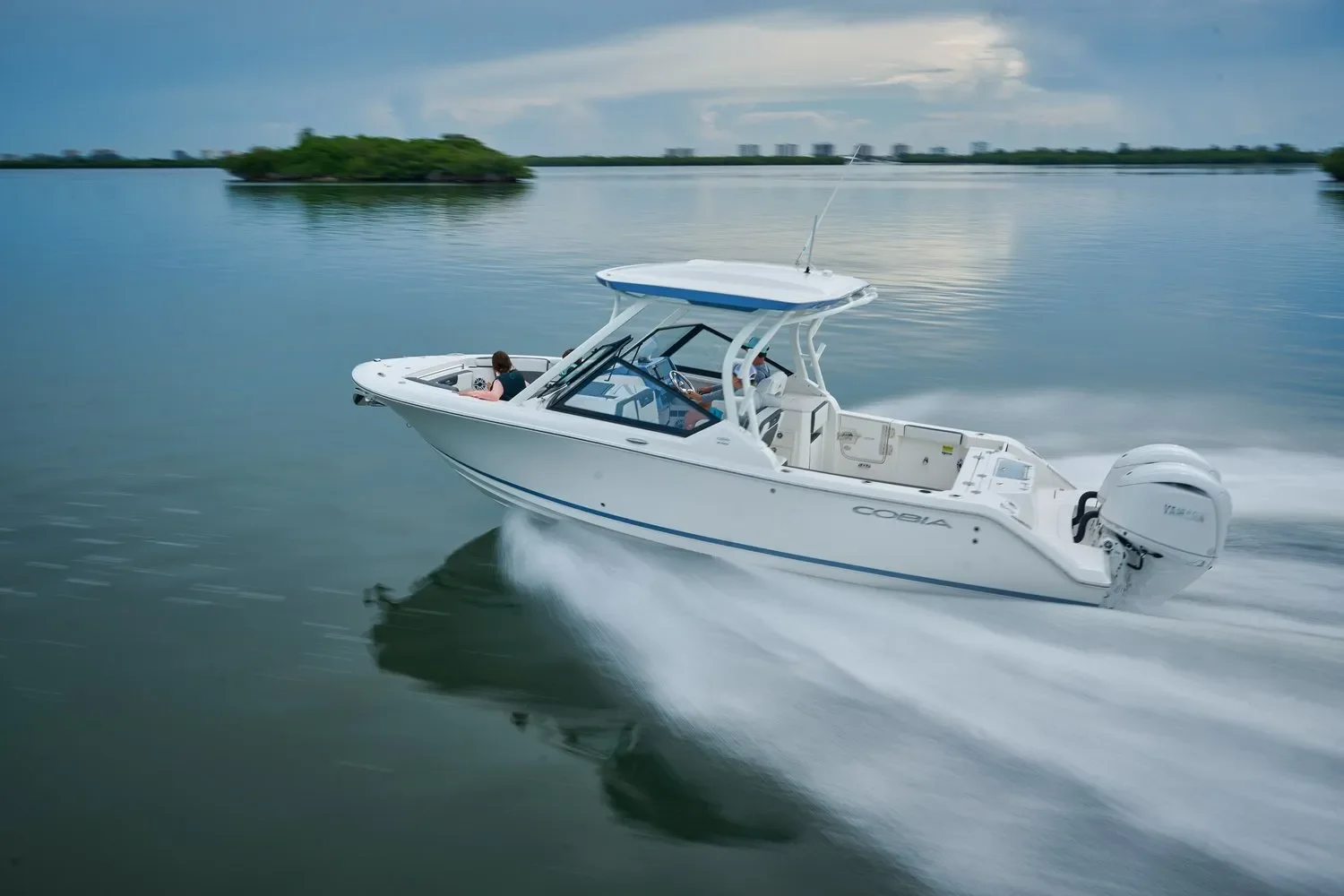
~$125,000 MSRP*Estimated MSRP
228 Traveler at a Glance

22'4"Length
8'6"Beam
8Capacity
106 galFuel Tank
250 HPMax Power
18°Deadrise
16"Draft
3,191 lbsDry Weight
~$630/moEst. Payment
POWER OPTIONS
- F200XD
- F200XSA2
BOW
- Stainless steel bow eye with chafe plate
- Anchor storage compartment with rope storage and anchor holding cleats
- LED navigation lights
- Curved bow backrest cushions
- Under seat insulated storage & fishbox
- Casting deck with removable filler board
- Stainless steel recessed grab rail at bow
- Removable bow filler cushion
- Forward console seating with contoured backrests and adjustable armrests
- Wind-dam with helm access console door
HELM
- Dometic SeaStar hydraulic steering system with tilt helm
- Two digital gauges with backlighting. Tachometer and speedometer with volt, fuel, and push button functions
- For Yamaha digital motors (multifunction instrumentation with tachometer, speedometer, volt, fuel, and fuel management functions, display may vary with availability, helm will vary with engine choice)
- Curved glass windshield with walkthrough
- Wet Sounds Marine Stereo
- Six Wet Sounds marine speakers in deck
- Fusion Apollo Marine Stereo
- Fusion marine speakers
- Pedestal style captain's chair
- Bimini top with marine canvas
- Top mount compass on console
- 12-volt power point
- Dash space for flush electronics (compatible for up to 7-inch display)
- Stainless steel steering wheel with turning knob
- Integrated console footrest
- Lockable head door
- Console courtesy lights
- Freshwater sink with hard surface countertop accent in white cloud
- Marine grade soft mat decking and console accents
COCKPIT
- Back-to-back passenger lounge chair
- Full cockpit coaming pads
- Stainless steel compression latches
- Cup holders (5)
- Stainless steel rod holders (6)
- In-floor watersport storage
- Aft bench seat with removeable cushions
- Self bailing cockpit with stainless steel grates
- Aft livewell with window (19 gallons, 800 GPH aerator)
- Livewell light
- Battery switch
- Pre-rigging for two batteries
TRANSOM
- Stainless steel walkthrough gate
- Freshwater washdown shower with 12 gallon tank
- Removable all around navigation-anchor light
- Raw water washdown outlet
- Bulkhead fittings for hydraulic hoses in splashwell
- Stainless steel transom saver
- Stainless steel rear boarding telescopic ladder with integrated boarding handle
- Marine grade soft mat deck accents
- Stainless steel through bolted grab rail
- Recessed electric trim tabs with integrated hull design
- Stainless steel U-bolts on port and starboard transom
BILGE
- Marine fuel/water separating filter
- (2) 1100 GPH bilge pumps with built in electronic float switches
- Raw water pump
- Freshwater pump
- Composite hull & deck
- Isothalic gelcoat
- Vinyl ester barrier coat
- Sand-grip deck surface
- Stainless steel rub rail
- Stainless steel fasteners
- Stainless steel through hulls
- Stainless steel pull-up cleats (5)
- Silver boot stripe available on white and full hull gelcoat options
- Limited Lifetime Hull Warranty
PowerYamaha 250 HPF150 · F200 · F225 · F250 (max)
Product Information Guide
228 Traveler Details on SeaFoxBoats.com →

240 DC at a Glance
24'6"Length
9'5"Beam
10Capacity
135 galFuel Tank
350 HPMax Power
20°Deadrise
18"Draft
6,330 lbsDry Weight
~$895/moEst. Payment
POWER OPTIONS
- F300NSB
FISHING
- Dual in-floor fishboxes (24 gal each, macerators optional)
- 22-gal fully plumbed livewell
OTHER
- Bait prep station with sink
- Rod and tackle storage
- Convertible first-mate chaise lounge
- Head compartment with wide entry
- Dual console layout
- Freshwater washdown
- Stainless steel hardware
- Non-skid deck surfaces
- Bow storage compartment
SEATING
- Hideaway aft bench seat
- Dedicated seating for 9
- Leaning post with seat
STEERING
- Helm protection and windscreen
- 12V outlets at helm
TOPS
- Sport T-top
POWER
- Yamaha F300NSB engine (base)
ELECTRICAL
- Navigation lights
- Bilge pump
PowerYamaha 350 HP maxF300NSB
Sea Fox 228 Traveler wins on price, warranty, and dealer support
Sea Fox 228 Traveler is backed by a Lifetime structural hull warranty and available from Avalanche Motorsports — the #1 Sea Fox dealer in the USA. Call (252) 946-0920 to compare the Sea Fox 228 Traveler and Cobia 240 DC side by side.
Key Takeaways
$45,000 Cheaper at MSRPSea Fox Wins
The 228 Traveler starts at $80,000. The Cobia 240 DC starts at $125,000. That $45,000 gap buys a Yamaha F300 engine, a full Garmin electronics suite, and still leaves money in your pocket.
Cobia Carries 135 Gallons of FuelCobia Wins
The 240 DC holds 135 gallons — enough for a Gulf Stream run from Beaufort Inlet and back with fuel to spare. The 228 Traveler is built for Pamlico Sound, Core Sound, and nearshore Spanish mackerel runs, not 120-mile offshore mahi trips. If your season includes regular Gulf Stream runs, the Cobia's tank is a real advantage.
3,139 Pounds Lighter — One Tow Vehicle ClassSea Fox Wins
The 228 Traveler weighs 3,191 lbs dry. The 240 DC weighs 6,330 lbs dry. An F-150 handles the Sea Fox. The Cobia requires a 3/4-ton truck minimum. If you're launching at Hobucken or the Washington waterfront ramp, that weight difference matters every single trip.
Cobia's 20° Deadrise vs Sea Fox's 18°Cobia Wins
The 240 DC's 20° transom deadrise gives it a sharper entry in steep 3-to-4-foot chop east of Oregon Inlet. The 228 Traveler runs an 18° transom with deeper forward sections — the Carolina Flare hull varies from bow to stern rather than holding a fixed angle. For Pamlico Sound's 2-foot standing chop, the difference is minimal. For regular offshore runs past the Outer Banks, the Cobia's extra 2° is a genuine edge.
Lifetime Hull Warranty vs Cobia's Limited CoverageSea Fox Wins
Sea Fox backs the 228 Traveler with a lifetime structural hull warranty for the original owner, a 10-year transferable hull warranty, and a 5-year blister warranty — provided a barrier coat is applied for in-water storage. Cobia publishes a limited warranty without matching those specific terms. When you sell the Sea Fox, the 10-year transferable warranty adds documented resale value.
Bottom Line: 228 Traveler for NC Inshore and NearshoreSea Fox Wins
We have 4 new 228 Travelers on the lot right now at $80,000 and one used unit at $80,000. The Cobia 240 DC is a capable boat with a real fuel range advantage for offshore work. But for red drum on the Neuse flats, flounder at Harkers Island, and Spanish mackerel runs off Beaufort Inlet, the 228 Traveler costs $45,000 less, tows behind a half-ton truck, and carries a lifetime hull warranty. Call us at Avalanche Motorsports and we'll put you on the water in one today.
Why Buyers Cross-Shop These Boats
A crabber from Bath NC came in last spring running a 22-foot center console he'd outgrown. He'd already sat in the Cobia 240 DC at a show in Raleigh and liked the Seakeeper Ride stabilization system — standard equipment on that boat. At 6,330 lbs dry, the Cobia sits heavy and the Seakeeper Ride genuinely smooths out the 2-foot standing chop he deals with crossing the Pamlico every weekend. That was a real advantage, and we told him so.
Then he walked the 228 Traveler on our floor. He knocked on the transom — solid Penske composite board, no wood anywhere. He pulled up the deck hatch and saw Kledgecell closed-cell PVC core, foam-filled composite stringers glassed directly to the hull. He asked what happens if the deck gets punctured. Answer: the core doesn't absorb water. Ever. The Cobia's warranty terms aren't published the same way. The Sea Fox carries a lifetime structural hull warranty plus a 5-year blister warranty — in writing, from the factory. He bought the 228 Traveler at $80,000. The Cobia started at $125,000. He put the $45,000 difference into a Garmin chart package and a second Yamaha rigging deposit.
Sea Fox vs. Cobia: Price and Value
As the #1 Sea Fox dealer in the USA, we have this conversation every week. Here is what the numbers show.
Cobia · starts at ~$125,000
240 DC
Starting at ~$125,000 depending on engine selection and options. A fully rigged, sea-ready 240 DC with electronics, outboards, and trailer will land most buyers above this figure.
Sea Fox · starts at ~$125,000
228 Traveler
Starting at ~$80,000 ° $45,000 less than the 240 DC at ~$125,000. Even rigged comparably, Sea Fox delivers more for less here.
I.Seakeeper Ride — Standard
The Cobia 240 DC ships with Seakeeper Ride active motion control as standard equipment. The Sea Fox 228 Traveler does not offer it. On a 9-mile Pamlico Sound crossing in a 15-knot southwest wind, that system actively reduces pitch and roll in real time.
II.135-Gallon Fuel Capacity
The Cobia 240 DC carries 135 gallons of fuel. That range matters on a Spanish mackerel run to the nearshore lumps off Oregon Inlet or a mahi trip pushing toward the Gulf Stream. The Sea Fox 228 Traveler's fuel capacity is not published, so verify before planning offshore runs.
III.Dual 35-Gallon Fish Boxes
Two 35-gallon insulated cockpit fish boxes give the Cobia 240 DC 70 total gallons of fish storage — enough for a serious red drum or flounder limit plus ice to keep them table-ready on a full-day Core Sound trip. The 228 Traveler does not match that insulated storage volume.
Why Sea Fox Wins
The $30,000 premium over the Sea Fox 228 Traveler buys you Seakeeper Ride as standard equipment, 135 gallons of fuel capacity, and two 35-gallon insulated fish boxes — none of which are available on the 228 Traveler.
Run the Numbers Yourself
Adjust the prices, down payment, rate, and term to see what the gap actually costs you every month.
228T-
Cobia 240 DC-
Monthly Difference-
Total Difference Over 20 years-
Estimates for comparison only, before tax, title, registration, and fees. Not a financing offer or quote - rates and terms depend on credit approval. Call (252) 946-0920 for current offers.
Build Quality: Sea Fox vs. Cobia
The 228 Traveler and 240 DC are both wood-free fiberglass boats, but the materials and process separating them matter when your hull sits in 90°F Pamlico Sound water for 300+ days a year. Sea Fox publishes every layer of their laminate schedule. Cobia does not disclose resin type on the 240 DC, and their VARIS vacuum infusion process applies only to models 26 feet and over — the 240 DC is built with conventional open-mold fiberglass.
Both all-compositeZero woodSF: Lifetime hull warranty
Cobia
Construction
The Cobia 240 DC is confirmed wood-free, which is a genuine baseline advantage over older fiberglass construction. At 24'6" and 6,330 lbs dry, Cobia builds a heavier, beamier platform — 9'5" beam — that adds stability at the dock and at rest. The Seakeeper Ride system comes standard, which is a real feature: it uses active fins to reduce pitch and roll underway. However, Cobia does not publish resin type for the 240 DC on cobiaboats.com, and the VARIS infusion process buyers see in Cobia marketing applies only to 26-foot-and-over models. The 240 DC uses conventional open-mold fiberglass — the same process Sea Fox uses, but without Sea Fox's published laminate schedule or lifetime structural warranty.
Sea Fox
How Sea Fox Builds the 228 Traveler Hull
Sea Fox lays the 228 Traveler with isothalic gelcoat from CCP — a high-flex formula with superior osmotic blister resistance compared to standard polyester gelcoat. Behind that sits a vinylester barrier coat, then 36-10 and 17-08 glass and matting in the radius for strength with minimal flex. The transom is a 2-inch Penske composite board — no wood, no water absorption, no rot — ever. Foam-filled composite stringers are fiberglassed directly to the hull, creating one unified structure rather than a bolted-in grid. That construction earns a lifetime structural hull warranty for the original owner, plus a 5-year blister warranty — both backed by Avalanche Motorsports as an authorized Sea Fox dealer.
Direct From Sea Fox — Highlighted Features
Standard
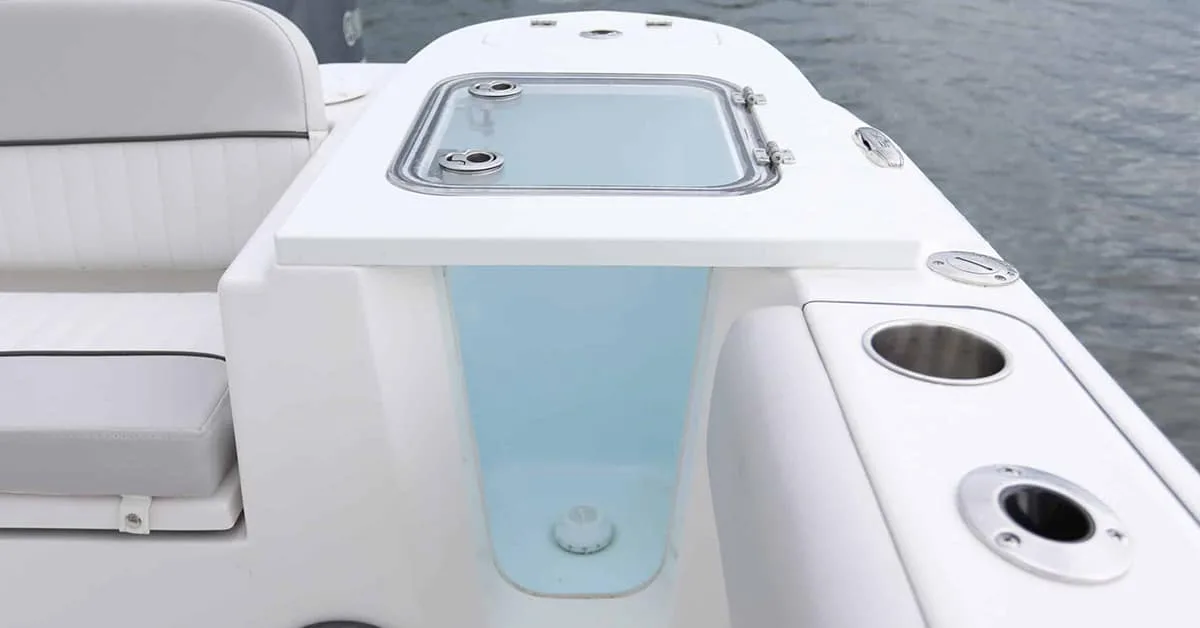
Pressurized Livewell
30-gal tournament-style pressurized livewell with aquarium window and 800 GPH aerator.
Standard
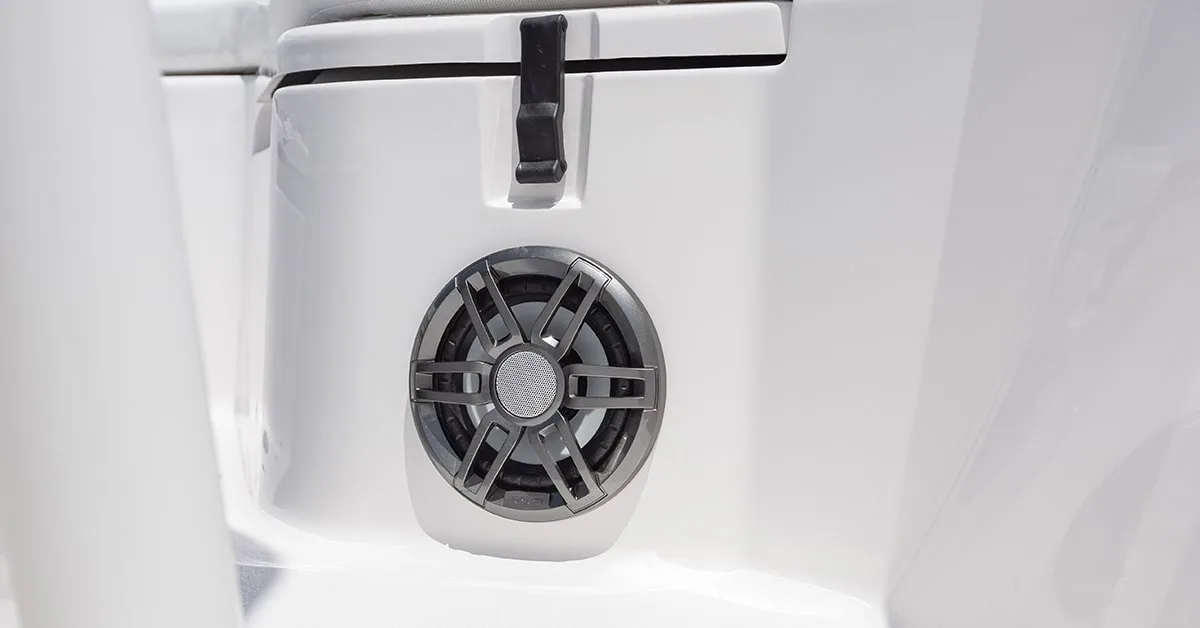
Fusion Apollo Stereo
Marine-grade Fusion Apollo stereo included standard.
Standard
Limited Lifetime Hull Warranty
Lifetime structural warranty transferable to subsequent owners.
Standard
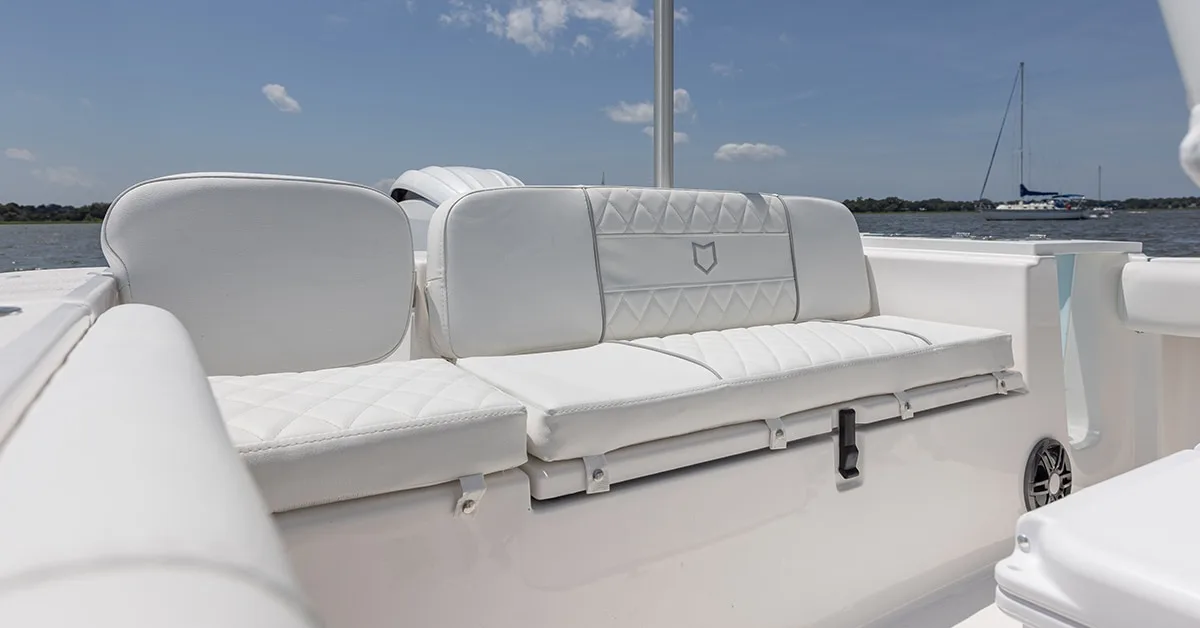
Aft Bench Seat
Removable cushion aft bench seat adapts from family seating to open fishing cockpit.
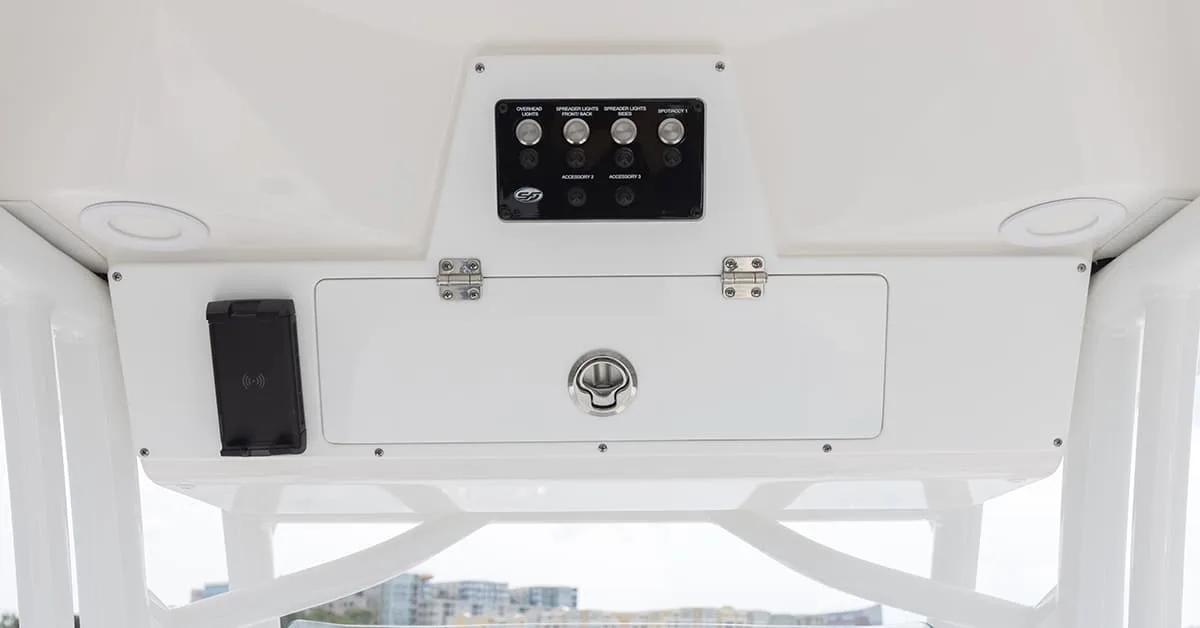
Available Option
Tech Pack
Mood lighting, underwater lights, courtesy lighting, and wireless charging in one add-on.
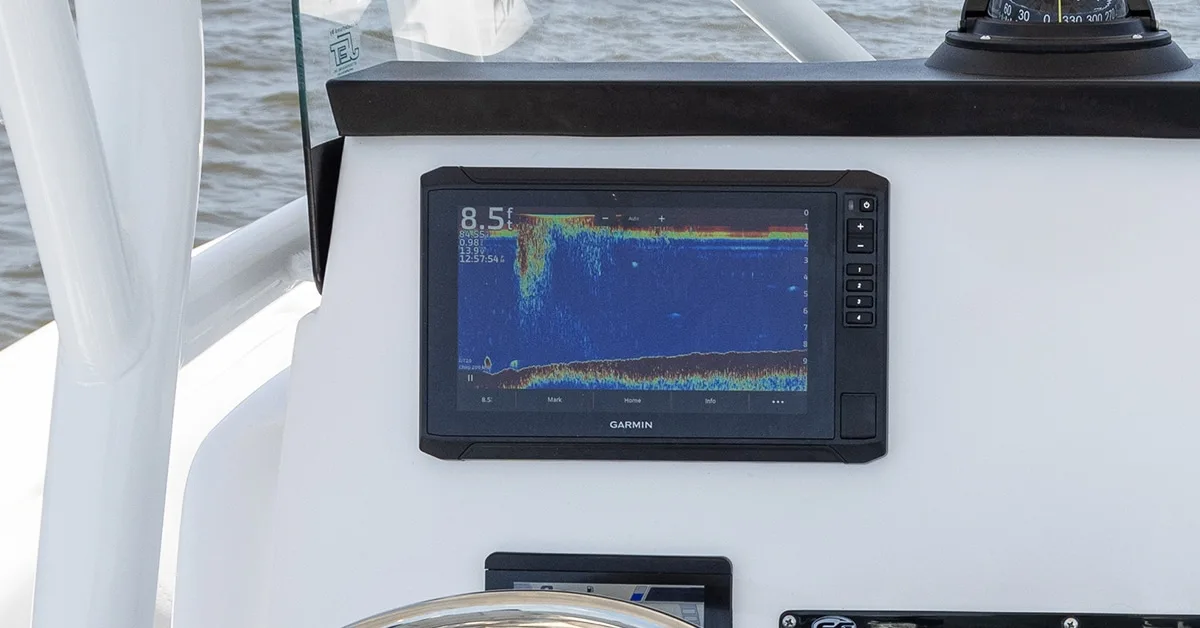
Available Option
Garmin 943XSV
9-inch touchscreen with SideVu, ClearVu, and CHIRP sonar.
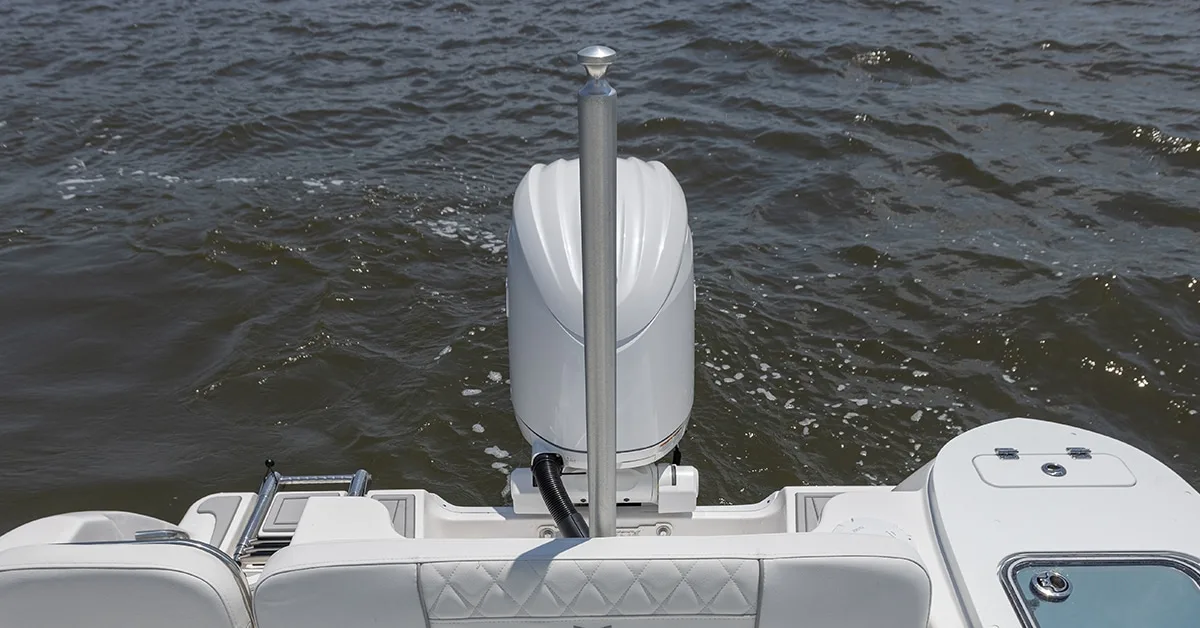
Available Option
Watersports Pack
Air station, stainless ski tow bar, and boarding platform.
Photos courtesy Sea Fox Boats.
Side-by-Side Specs: 228 Traveler vs. 240 DC
→ Swipe table to see full comparison
| Spec | Sea Fox 228 Traveler | Cobia 240 DC |
|---|---|---|
| LOA | 22'4" | 24'6" |
| Beam | 8'6" | 9'5" |
| Deadrise | 18° | 20° |
| Fuel Capacity | 106 gal | 135 gal |
| Max HP | 250 HP | 350 HP |
| Draft | 16" | 18" |
| Dry Weight | 3,191 lbs | 6,330 lbs |
| Person Capacity | 8 | 10 |
| Livewell | 19 gal | 24-gal livewell |
| Hull Warranty | Lifetime structural hull | Limited |
| MSRP (Starting) | $80,000 | $125,000 |
| Price Difference | ~$45,000 less than Cobia 240 DC | — |
| Monthly Payment (~240 mo) | ~$630/mo | ~$895/mo |
Interested in a Sea Fox? Get a Quote on the Sea Fox 228 Traveler
Call (252) 946-0920
Speak directly with the #1 Sea Fox dealer in the USA — Washington, NC
Performance & Range
FUEL RANGE: WHERE THE COBIA 240 DC HAS A REAL EDGE
The Cobia 240 DC carries 135 gallons of fuel. That number matters on a Gulf Stream run out of Beaufort Inlet — roughly 60 miles offshore and back, burning 20–25 gallons per hour at cruise. A 135-gallon tank gives you a comfortable cushion for that trip. The Sea Fox 228 Traveler's fuel capacity is not published by the manufacturer, and we won't guess at a number. What we know: the 228 Traveler is built for Pamlico Sound day trips, nearshore Spanish mackerel runs, and flounder fishing the Neuse flats — not 120-mile round trips to the Gulf Stream. If your primary target is mahi and wahoo 60 miles out of Oregon Inlet, the Cobia's tank is a genuine advantage. If you're running to the nearshore reefs, the shoals off Cape Lookout, or the back of Core Sound, the 228 Traveler's lighter 3,191-lb hull burns less fuel per mile and gets on plane faster with a smaller engine.
ENGINE RIGGING: WHAT WE PUT ON THE 228 TRAVELER AND WHY
At Avalanche Motorsports, we rig the Sea Fox 228 Traveler with a Yamaha F200 or F225 four-stroke. The 228 Traveler is rated for the power it needs, and at 3,191 lbs dry, a Yamaha F200 pushes it to hull speed efficiently without overloading the transom. The F-series Yamaha is our go-to for NC buyers because Yamaha's dealer network covers every inlet from Oregon to Beaufort, and the F200/F225 four-stroke runs clean enough to meet the fuel economy expectations of buyers doing 100+ hours a year on Pamlico Sound. The Cobia 240 DC is rated to 350 HP — a larger, heavier platform that needs more power to move its 6,330-lb hull. More horsepower means a larger engine purchase price and higher fuel burn at every throttle setting. For buyers who want to run light and fish hard inside the sounds, the 228 Traveler's power-to-weight ratio is the better fit.
ROUGH-WATER HANDLING: CAROLINA FLARE VS 20° TRANSOM DEADRISE
The Cobia 240 DC runs a 20° transom deadrise — 2° more than the Sea Fox 228 Traveler's 18° transom measurement. That 2° difference is most noticeable in beam seas with long, widely-spaced swells. In the 2-foot standing chop you hit on the Neuse River flats or the short, steep wind waves that build across Pamlico Sound's 30-mile fetch, transom deadrise is not the deciding factor — hull entry and flare are. The Sea Fox 228 Traveler's Carolina Flare hull runs deeper deadrise forward, then transitions to 18° at the transom. The bow pierces the wave; the flared sides deflect spray away from the cockpit. Standard electric trim tabs let you dial in bow angle as conditions change. The Cobia's 20° transom deadrise does not make it a better boat in the short-period chop that defines 90% of NC coastal fishing days. It is a meaningful spec for buyers doing regular blue-water runs in open-ocean conditions — not for the angler targeting red drum on the Pamlico flats or running the Cape Lookout shoals.
SPEED AND EFFICIENCY: LIGHTER HULL WINS AT THE RAMP AND AT CRUISE
A 3,191-lb boat gets on plane faster, reaches cruise speed sooner, and burns less fuel doing it than a 6,330-lb boat. With a Yamaha F200 on the transom, the Sea Fox 228 Traveler reaches cruise in the low-to-mid 30-knot range and tops out near 45 knots depending on load and trim. The Cobia 240 DC needs its full 350 HP to move 6,330 lbs to comparable speeds, and fuel burn at wide-open throttle reflects that weight penalty. For the buyer running from Washington, NC to the Pamlico Sound fishing grounds and back in a single morning, the 228 Traveler's lighter hull means more time fishing and less time at the fuel dock. The Cobia's speed ceiling with 350 HP is higher on paper, but the Sea Fox gets there more efficiently with less engine.
Fishing Features
Livewells: Bait Survival on a 90°F Pamlico Sound Day
The Cobia 240 DC runs a 24-gallon livewell. That is enough volume to keep a dozen live menhaden or a handful of finger mullet alive during a full-day drum run on the Neuse flats — provided the recirculation pump keeps pace with summer water temps pushing 85°F. Cobia does not publish pressurization specs or aeration details for the 240 DC, so confirm pump flow rate before you commit to live-lining trips.
Sea Fox does not publish a livewell spec for the 228 Traveler in the available data. If live bait is your primary tactic — Spanish mackerel runs off Beaufort Inlet, live-lining pogies for big drum — verify livewell capacity directly with us before purchase. We have four units on the lot right now and can walk you through the rigging on each one.
Fish Boxes: Capacity, Drainage, and End-of-Day Cleanup
The Cobia 240 DC wins this category on paper. Two 35-gallon insulated cockpit fish boxes give you 70 total gallons of fish storage — enough for a serious mahi or wahoo day if you run nearshore out of Oregon Inlet. Cockpit-mounted boxes mean fast access when fish are coming over the gunwale fast. Insulation keeps ice longer on a July afternoon when air temps hit 95°F at the dock.
The Sea Fox 228 Traveler runs an in-floor fish box. That placement keeps the center of gravity low, which matters when you are loading 40 pounds of flounder and ice and still need to run back across Pamlico Sound in building afternoon chop. The trade-off: you bend down to access it. The advantage: your cockpit deck stays completely clear for fighting fish and moving around.
If you are targeting volume — multiple species, multiple anglers, full coolers — the Cobia's 70-gallon total storage is the honest answer. If you want a clean, uncluttered cockpit for sight-fishing red drum in Core Sound shallows, the in-floor layout on the 228 Traveler keeps gear out of your way.
Rod Storage and Cockpit Layout
The Cobia 240 DC is a dual console. That layout puts a passenger console on the port side, which eats cockpit real estate and limits where you can run rod holders along the gunwales. With 10-person capacity, the boat is engineered to carry a crowd — that is a family boat that also fishes, not a fishing boat that also carries family. Rod management on a dual console with 10 people aboard gets complicated fast.
The Sea Fox 228 Traveler's cockpit layout is built around the angler. Without a second console breaking up the port side, you get full gunwale access for flush-mount rod holders, a cleaner casting platform, and more room to work a fish. When you are fighting a 40-inch red drum at Harkers Island and need to move from stern to bow without tripping over a console, that open layout matters.
Cobia does not publish rod holder count or rod locker dimensions for the 240 DC. Sea Fox rod storage specs for the 228 Traveler should be confirmed at the dealership — we can show you the actual rigging on any of the four units currently in inventory.
Ready to See It In Person?
21 Sea Fox 228 Commanders In Stock — Washington, NC
We're the #1 Sea Fox dealer in the USA. Schedule a sea trial on Pamlico Sound — same week, no pressure.
Who Should Buy Sea Fox vs. Cobia: Match the Right Boat to Your Needs
The Value Case — from ~$80,000
Choose 228T if…
- You fish Pamlico Sound 40+ days a year and want a lifetime structural hull warranty backed by a dealer who does warranty work in-house in Washington, NC — not a 600-mile round trip to a regional service center.
- You tow with a Ford F-150 or Ram 1500 and need a rig under 3,500 lbs dry. The 228 Traveler at 3,191 lbs fits. The Cobia 240 DC at 6,330 lbs does not.
- You want $37,000 in your pocket at purchase — enough to fully rig the 228 Traveler with a Garmin GPSMAP 1243xsv, a T-top, a raw-water washdown, and a Yamaha F200 and still come out ahead of the Cobia's base price.
- You run from Washington Marina to Harkers Island or Cape Lookout and need a boat that launches at any ramp on the Neuse or Core Sound without checking tide charts for ramp depth first.
- You want zero-wood construction with a named material stack — Kledgecell deck core, Penske composite transom, foam-filled composite stringers fiberglassed to the hull — not a general claim of wood-free build.
The Prestige Case
Choose Cobia if…
- You run from Beaufort Inlet to the 40-fathom ledge and need 135 gallons of fuel on board. The Cobia 240 DC carries it. The 228 Traveler does not have a published fuel capacity that matches that range.
- You want Seakeeper Ride stabilization standard from the factory. The Cobia 240 DC includes it. The Sea Fox 228 Traveler does not offer it as a factory option on this model.
- You regularly carry 8–10 people — the Cobia 240 DC is rated for 10 persons. The 228 Traveler is a smaller platform and is not designed for that headcount.
- You want twin 35-gallon insulated fish boxes and a 24-gallon livewell built into the cockpit as standard equipment, and you want the extra 2° of deadrise (20°) for running the Gulf Stream edge in a dual console layout.
- You want a dual console with a full walk-through windshield and enclosed head option for overnight or multi-day runs where family comfort at the helm matters as much as fishing.
Everything Buyers Ask: Frequently Asked Questions
Select a category below to view common questions and our honest answers.
Category 01
Price & Value
The price gap, and who each boat is honestly right for.
The Sea Fox 228 Traveler starts at $80,000 MSRP. We have four new units on our lot right now at $80,000 and one used unit at $125,000. The Cobia 240 DC starts at $125,000. That is a $45,000 gap at MSRP and a $45,000 gap comparing our new inventory price to the Cobia base. That $45,000–$45,000 buys a full electronics package, a T-top, a Yamaha F200, and still leaves money in your pocket.
The Cobia earns part of that premium: Seakeeper Ride is standard, the 135-gallon tank is a real offshore advantage, and the dual console layout with 10-person capacity serves a different use case. If you run to the Gulf Stream regularly and carry 8+ people, the Cobia's feature set justifies a premium. If you fish Pamlico Sound, the Neuse, and nearshore runs to Cape Lookout, the 228 Traveler does that work at $45,000 less and with a lifetime structural hull warranty the Cobia does not match.
Yes. We have one used Sea Fox 228 Traveler on our lot right now at $80,000. That is $45,000 less than the Cobia 240 DC base price. Used Sea Fox boats hold value well in eastern NC because the composite-only construction — no wood anywhere in the hull, deck, or transom — means a well-maintained hull does not develop the soft spots or transom rot that kill resale on older fiberglass boats. Call us at Avalanche Motorsports in Washington, NC to confirm availability before you make the drive.
The Price Gap at a Glance
$37,000+More for the Cobia 240 DC
What You Get With Sea Fox for Less
Offshore Capability
18° Carolina Flare deep-V hull, 106-gal fuel, built for the waters Carolina buyers actually fish.
Built to Last
All-composite construction with a Limited Lifetime Hull Warranty. Zero wood. Ever.
Strong Equipment
19 gal, In-floor fish boxes, 9 rod holders — standard.
Comparable ROI
Net depreciation per year is roughly equal — at a far lower entry price.
$37,000+Upfront savings
$64,000Saved over the life of a 240-mo. loan
~$630/moEst. payment, 228 Traveler — $0 down, 5.99% APR, 240 mo.
~$895/moEst. payment, 240 DC — $0 down, 5.99% APR, 240 mo.
Category 02
Fuel & Range
Fuel capacity, range, and what it means on the water.
The Cobia 240 DC's 135-gallon tank is a genuine advantage for offshore runs. If you are running from Beaufort Inlet to the 40-fathom ledge and back — roughly 80–100 miles round trip — that tank gives you margin. The Sea Fox 228 Traveler is built for Pamlico Sound, the Neuse, Core Sound, and nearshore runs inside 20 miles. For Spanish mackerel runs off Cape Lookout or red drum on the Pamlico flats, the 228 Traveler's range is sufficient. For mahi and wahoo at the Gulf Stream, the Cobia's 135-gallon capacity is the right tool.
Real-World Range Comparison
228 Traveler
Cruising Range
~318 mi106 gal ° 3 mpg (Single-Engine)
~318MilesSingle-Engine • 106 gal • ~3 mpg
240 DC
Cruising Range
~203 mi135 gal ° 1.5 mpg (Twin-Engine)
~203MilesTwin-Engine • 135 gal • ~1.5 mpg
228 Traveler has more real-world range
228 Traveler delivers ~318 miles vs. ~203 for the 240 DC. The 240 DC's larger 135-gal tank feeds 2 engines ° tank size alone does not tell the range story.
Range estimates at cruising speed. Single-engine ~3 mpg • twin-engine ~1.5 mpg • triple ~1.1 mpg. Actual range varies with load, sea state, and speed.
Category 03
Hull & Performance
Hull design, ride quality, and offshore capability.
The Cobia's 20° fixed deadrise and Seakeeper Ride stabilization are real advantages in 2-foot standing chop. The Sea Fox 228 Traveler runs an 18° transom deadrise with deeper forward sections — the hull is not a fixed angle, it varies from bow to stern, which is a more sophisticated design than a single-angle modified-V. The Carolina Flare bow deflects spray and keeps the cockpit dry in the short, steep chop that builds on the Pamlico Sound fetch. For most NC inshore and nearshore conditions, the 228 Traveler's hull handles the water. For extended offshore runs in 3-foot-plus seas, the Cobia's Seakeeper Ride earns its price.
Carolina Flare means the bow sides flare outward, deflecting spray away from the cockpit instead of letting it roll back over the gunwale. On the Neuse River flats in a 15-knot southwest wind, that matters — you stay dry at 25 knots instead of getting soaked at 20. The 18° transom deadrise measurement is the aft section; the forward sections run deeper, so the bow pierces the wave and the stern planes efficiently. That varying deadrise is why Sea Fox does not publish a single fixed angle — the hull is designed to do two different jobs at bow and stern.
Hull Design Compared
228 Traveler
18° Carolina Flare deep-V
Draft (Engines Up)
16"✓ shallower ° more NC water access
- Modified-V ° balanced chop and stability
- Carolina Flare ° outward flare deflects spray for a drier cockpit
- 16" draft ° runs inshore NC water the 240 DC cannot reach
- 8'6" beam ° narrower ° better speed efficiency
240 DC
20° Cobia proven hull design, Seakeeper Ride active trim control standard
Draft (Engines Up)
18"
- Offshore-capable V ° cuts through chop, resists hobby-horsing
- 9'5" beam ° wider ° more stable at anchor
- 18" draft ° deeper than 228 Traveler ° some NC inshore areas inaccessible
- 240 DC has a sharper entry (20° vs 18°) ° better in offshore chop
Draft is the spec buyers overlook most.
228 Traveler drafts 2" less than the 240 DC ° that is the difference between running the Pamlico Sound flats and having to anchor offshore. For NC inshore fishing, shallow draft is not a minor spec.
Category 04
Construction & Quality
How each boat is built and what that means long-term.
Sea Fox uses isothalic gelcoat from CCP, a vinyl ester barrier coat, Kledgecell closed-cell PVC deck core, a 2-inch Penske composite transom board, and 100% foam-filled composite stringers fiberglassed directly to the hull. No wood anywhere. Cobia confirms wood-free construction on the 240 DC, which is a legitimate claim. The difference is the named material stack — Sea Fox publishes every component. Cobia does not disclose resin type on cobiaboats.com for the 240 DC, and VARIS vacuum infusion only applies to Cobia models 26 feet and over. The 240 DC at 24'6" uses conventional open-mold fiberglass.
No. VARIS — Cobia's Vacuum-Assisted Resin Infusion System — applies only to Cobia models 26 feet and over. The Cobia 240 DC is 24'6" and uses conventional open-mold fiberglass construction. That is not a disqualifier, but it is not the premium build process Cobia markets on its larger hulls. The Sea Fox 228 Traveler uses isothalic gelcoat, vinyl ester barrier coat, and a fully named composite material stack with zero wood in any structural component.
Built to Last: Construction Compared
228 Traveler
Hull Layup
Isothalic GelcoatVinyl Ester BarrierAll-Composite LaminationNo Wood ° Ever
- Isothalic Gelcoat outer layer ° UV and scratch resistance
- Vinyl Ester Barrier ° blocks osmotic blistering
- All-composite, foam-filled ° zero wood in the structure
- Lifetime Limited Structural Hull + 5-year blister
240 DC
Hull Layup
Composite GelcoatComposite constructionComposite LaminationNo Wood in Structure
- 100% composite construction ° no wood in structural components
- Composite construction
- Foam-filled hull sections for flotation
- Limited warranty
Sea Fox carries a lifetime hull warranty ° 240 DC does not.
Sea Fox uses Isothalic Gelcoat + Vinyl Ester Barrier ° a specific combination that resists osmotic blistering. Both are all-composite builds. The warranty difference is meaningful if you plan to keep the boat 7+ years or resell it ° a lifetime warranty transfers and supports resale value.
Category 05
Family & Capacity
Comfort, seating, and family-friendly features.
The Cobia 240 DC is the stronger family platform: 10-person capacity, dual console layout with a walk-through windshield, and a larger cockpit at 24'6" LOA. If you have four kids and two adults and want a boat that fishes in the morning and cruises in the afternoon, the Cobia's layout is built for that. The Sea Fox 228 Traveler is a fishing-first dual console — it fits a family of four to five comfortably, but it is not rated for 10 persons and does not have the enclosed helm area the Cobia offers. Pick the Cobia if family headcount and comfort at the helm are the primary criteria.
Family Day on the Water
228 Traveler
Beam
8'6"8-person USCG capacity- Aft bench seat (removable) ° open cockpit for fishing, seating when not
- Forward bow seating with contoured backrests
- Half-ton towable (F-150, Ram 1500) ° easier day-trip logistics
- 16" draft ° shallow enough for calm inshore spots
240 DC
Beam
9'5"10-person USCG capacity- Wider beam ° more stable at anchor for non-anglers
- Fold-down transom seating and bow seating standard
- 3/4-ton truck recommended
- Seakeeper Ride reduces roll ° noticeably more comfortable at anchor
Honest take: both are fishing boats first.
Center consoles are designed around rods, livewells, and fish boxes. Families fit comfortably on either boat for a day on the water ° but if family comfort is the primary use case rather than fishing, a dual console or deck boat is worth a look. If you fish hard and bring the family along, both handle it well.
Category 06
Resale & Ownership
Long-term value, resale, and ownership costs.
Cobia carries strong brand recognition in the Southeast and resells well in Florida and coastal NC markets. A well-optioned 240 DC will attract buyers who know the Maverick Boat Group name. Sea Fox resale in eastern NC is equally strong because Avalanche Motorsports is the #1 Sea Fox dealer in the USA — there is an active local buyer pool and in-house service history that supports asking price. The 228 Traveler's composite-only construction means no soft deck or transom rot to negotiate around at resale, which protects value at the 5- and 10-year mark.
If both boats depreciate at a similar percentage — roughly 30–40% over 10 years — the Cobia's higher purchase price means a larger absolute dollar loss. A 35% depreciation on $125,000 is $45,000 lost. The same rate on $125,000 is $45,000 lost. That is a $12,950 difference in depreciation alone, on top of the $45,000 you saved at purchase. The Sea Fox 228 Traveler's lifetime structural hull warranty also transfers once to a new owner within a 14-day window, which is a documented selling point that supports asking price when you list it.
Real Cost of Ownership
228 Traveler
Entry Price
~$80,000$45,000 less than 240 DC- $37,000 lower purchase price ° less capital at risk
- Half-ton truck (F-150, Ram 1500) ° no truck upgrade needed
- Lifetime hull warranty transfers to new owner ° supports resale
- Lower price = lower insurance premium and loan balance
240 DC
Entry Price
~$125,000+Higher nominal resale value in dollars- Higher purchase price ° more capital tied up in the asset
- 3/4-ton recommended ° 3,139 lbs heavier than 228 Traveler
- Higher nominal resale dollars (but percentage depreciation is comparable)
- Higher insurance and financing costs at purchase price
The real ownership gap is tow vehicle and insurance.
228 Traveler is 3,139 lbs lighter ° that is often the difference between keeping your existing half-ton truck or buying a 3/4-ton to own the 240 DC. Factor that into total cost of ownership. Lower purchase price also means lower insurance premiums and lower loan exposure.
Category 07
Financing
Payments, rates, and how to structure the purchase.
At 6.5% APR over 240 months (20 years), the Sea Fox 228 Traveler at our current new price of $95,000 runs approximately $706/month. The Cobia 240 DC at $125,000 runs approximately $929/month. That is a $223/month difference — $2,676 per year — for the same loan term. Over 10 years that is $45,000 in additional payments before you account for the purchase price gap. Come into Avalanche Motorsports in Washington, NC and we will run exact figures with current lender rates for your credit profile.
Cost Comparison at a Glance
228 Traveler
Starting At~$80,000~$630/mo financed240 DC
Starting Around~$125,000+~$895/mo financedYou Keep$37,000+with the Sea Fox 228 Traveler
$265/month Difference
Real money over a 20-year loan — trailer, electronics, or a decade of outboard service.
~65% of Buyers Finance
The lower monthly payment is cited in 80%+ of those conversations at our dealership.
Local & National Lenders
Our team walks you through the actual ownership math, not just the sticker.
Honest Numbers
Run the numbers honestly, decide what matters, and make the call with confidence.
Category 08
Dealer & Service
Why Avalanche Motorsports is the right choice.
Avalanche Motorsports is the #1 Sea Fox dealer in the USA, located in Washington, NC — 20 minutes from Pamlico Sound. We carry Sea Fox warranty work in-house, which means your lifetime structural hull claim does not require shipping the boat to South Carolina. We stock four new 228 Travelers right now, so you are not waiting on an order. We are also Yamaha Marine certified, so engine warranty and rigging are handled at the same address. A Cobia dealer can sell you a 240 DC, but they cannot service a Sea Fox warranty claim — and if your nearest Cobia dealer is in Wilmington or Virginia Beach, every service visit is a 2–4 hour tow.
Why Buy From Avalanche Motorsports?

#1 Sea Fox Dealer in the USA
Deepest inventory and product knowledge in the country.
Nationwide Reach
We ship boats, arrange transport, and support buyers across the country.
Factory Certified Service
Certified technicians, pre-purchase inspections, and genuine parts.
Long After the Sale
Support before, during, and long after delivery — we've got your back.
Washington, NC — the Heart of Carolina Fishing
Tue–Fri 8am–5:30pm · Sat 8am–2pm EST · Serving Manteo, Morehead City, and buyers as far as Virginia Beach and beyond.
Still have a question? Call our Sea Fox experts at (252) 946-0920
#1 Sea Fox Dealer in the USA
Factory PricingManufacturer relationships = real deals
Certified ServiceSea Fox & Yamaha factory-trained
15+ Years NC WatersOregon Inlet to Pamlico Sound
Our Take
228 Traveler Wins on Weight, Warranty, and Wallet
The Sea Fox 228 Traveler's zero-wood composite construction — Kledgecell deck core, Penske composite transom, foam-filled composite stringers fiberglassed to the hull — is backed by a lifetime structural hull warranty. After 300+ days of saltwater exposure and 90°F summer mooring temps on Pamlico Sound, there is no wood anywhere in this boat to rot.
We've sold over 800 Sea Fox boats from this lot in Washington, NC. When a buyer puts the 228 Traveler next to the Cobia 240 DC, the conversation always lands on three facts: the Sea Fox is $45,000 less at MSRP, 3,139 lbs lighter, and carries a lifetime structural hull warranty versus Cobia's limited warranty. The Cobia is a well-built boat — Maverick Boat Group has 60+ years behind them — but at $125,000 it needs to justify that premium, and for most NC inshore and nearshore buyers, it doesn't.
The Cobia 240 DC comes with Seakeeper Ride as a standard feature — an active hull stabilization system that genuinely flattens out the 2-foot chop at Beaufort Inlet. If you're running a family of 10 and stabilization is non-negotiable, the Cobia delivers that out of the box.
Open Tue–Fri 8am–5:30pm · Sat 8am–2pm EST · Sea Fox boats in NC
Quote Request · No Pressure
Interested in a Sea Fox? Get a Quote on the Sea Fox 228 Traveler
Explore More Sea Fox Resources
Helpful guides, comparisons, and model information to help you make the right decision.
Commander SeriesOffshore Excellence
Traveler SeriesAdventure Ready
Bay Fox SeriesInshore Performance
Side Console SeriesVersatile & Practical
OthersAll Sea Fox Boats
Other Sea Fox Models to Consider
View All Sea Fox Models →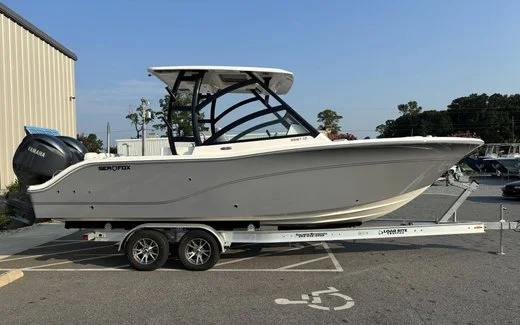
268 TRAVELER20° Deadrise — Family Offshore Adventure
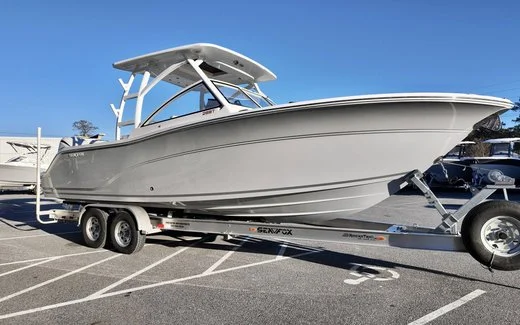
288 TRAVELER20° Deadrise — Premium Dual Console

228 COMMANDER18° deadrise — Entry-Level Offshore
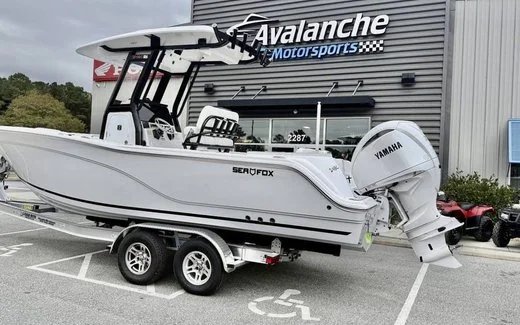
248 COMMANDER18° Deadrise — Nearshore to Offshore

268 COMMANDER18° Deadrise — Most Popular Offshore

248 SIDE CONSOLE18° Deadrise — Versatile Side Console
01 · Compare
228 Traveler Comparisons
Every head-to-head comparison we've built for this model.
- 228 Traveler vs. Cobia 240 DCYou're Here
- 228 Traveler vs. Cobia 250 DC
- 228 Traveler vs. Grady-White Freedom 215
- 228 Traveler vs. Key West 239 DFS
- 228 Traveler vs. Sea Fox 268 Traveler
- 228 Traveler vs. Tidewater 232 LXF
02 · Validate
Do Your Homework
The research that answers "am I making the right call?"
- Sea Fox Hull Design & Construction
- Sea Fox Build Process (Behind the Glass)
- Sea Fox Lifetime Hull Warranty — What It Covers
- 228 Traveler Specs & Pricing
- Sea Fox Isothalic Gelcoat — Why It Matters
- Are Sea Fox Boats Good?
- Are Sea Fox Boats Worth the Money?
- Are Sea Fox Boats Reliable?
- Are Sea Fox Boats Good Offshore?
- How Long Do Sea Fox Boats Last?
- What Is Deadrise?
03 · Own
Own With Confidence
Financing, towing, rigging — everything after the handshake.
Visit Avalanche Motorsports
2287 W. 5th St., Washington, NC 27889
Tue-Fri 8am-5:30pm · Sat 8am-2pm EST
#1 Sea Fox Dealer in the USA
- Largest Selection
- Fast Delivery
- Factory Certified
- Parts & Service
- Expert Support
- Family Owned
Written & Reviewed By
Avalanche Motorsports - Washington, NC - #1 Sea Fox Dealer USA
We're a 20+ year old dealership serving boaters across Eastern NC and beyond. Our team lives and breathes boating and we're here to help you find the perfect Sea Fox for your adventures.
20+ YearsIn Business
ThousandsHappy Customers
6,000+Boats Delivered

Product Information Guide
Coastal Ride Rating System
How we score hull performance across 5 dimensions
Every boat on this site is rated using the same engineering principles — deadrise angle, beam, draft, flare type, and weight. The result is a fair, data-driven comparison based on published specs, not marketing claims.
1 — Chop Penetration
How well the hull cuts through 2–3 ft coastal chop at cruising speed. Driven by: deadrise angle (higher = cuts better), entry angle, and weight. Matters most on Pamlico Sound and coastal inlets.
2 — Offshore Swell Comfort
How the boat handles 4+ ft ocean swells. Driven by: deadrise (deeper V softens impact), waterline length, and beam. Matters on Gulf Stream runs from Oregon Inlet and Beaufort.
3 — Spray & Dryness
How dry the cockpit stays in rough water. Driven by: flare type (Carolina flare deflects spray outboard — the biggest factor), freeboard, and trim tabs. Standard on Sea Fox, optional on most competitors.
4 — Shallow Water Access
Ability to navigate shallow inlets, tight bays, and flats. Driven by: draft (less = better) and beam (wider beam adds stability in thin water). NC anglers fish both deep and shallow in the same trip.
5 — Stability at Rest
Comfort when anchored or idle. Driven by: beam (wider = more stable), deadrise (shallower V is steadier at anchor), and draft. Matters when you’re anchored up waiting for a bite.
Methodology: All scores are calculated from published manufacturer specs using a consistent formula. Chop Penetration is weighted 2× in the overall score because it has the most day-to-day impact for NC coastal anglers.
Score scale
9–10Exceptional
8–9Excellent
7–8Very Good
6–7Good
5–6Adequate
Scores reflect hull-geometry performance potential from published specs. Actual performance varies with load, sea state, and engine package.
ⓘ Pricing estimates as of November 2026. Sea Fox 228 Traveler: ~$80,000++ based on current Avalanche Motorsports inventory. Cobia 240 DC: ~$125,000+ based on published dealer prices. Excludes tax, title, registration, and fees.