
Sea Fox Boat Maintenance Guide — What Our Service Team Actually Does
Our service department has worked on more Sea Fox boats than most shops will see in a lifetime. This guide covers what we actually do — not the theoretical manual, but the real maintenance that keeps these boats running in NC saltwater conditions year after year.
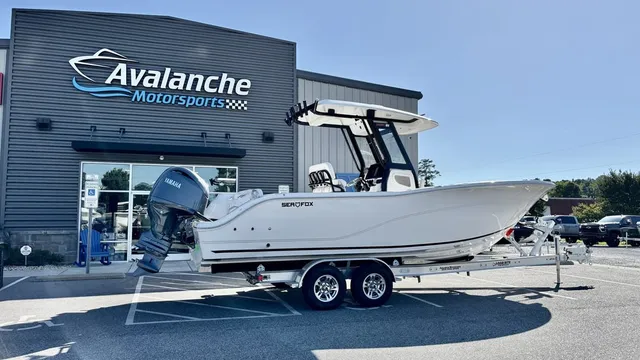
Why Sea Fox Maintenance Is Simpler Than Most Boats
The single biggest advantage of a Sea Fox when it comes to long-term ownership is what’s not in it: no wood stringers, no wood transom, no wood deck core. The hull doesn’t absorb water. That eliminates the number one maintenance headache on older fiberglass boats — the slow-motion rot that turns a $30,000 used boat into a $30,000 hull with a $20,000 repair bill.
What you are left with is a straightforward maintenance program focused on three things: your outboard engine, your raw water cooling system, and periodic attention to gelcoat and hardware. All of it is manageable. None of it is complicated if you stay on schedule.
- All-composite hull: No structural wood anywhere. Gelcoat stays sharp, stringers stay solid, transom stays tight.
- Yamaha outboards: One of the most serviceable engines in the marine industry. Parts are available, service intervals are clear, and any competent Yamaha tech can work on them.
- NC saltwater context: Coastal NC saltwater is demanding. The maintenance schedule below is written for boats that see saltwater regularly, not freshwater pond fishing.
Before Every Trip: The Quick-Check List
This takes 10 minutes and has saved people from ruined trips. Do it every time — not just when you feel like it.
- Engine oil: Check level. Low oil is an engine killer. No exceptions.
- Bilge pump: Test it. Verify it cycles and that the discharge is clear.
- Nav lights: Check bow, stern, and anchor light function. Required by law after sunset.
- Kill switch lanyard: Test it. Attach it to yourself before you leave the dock.
- Fuel: Check level and inspect the fuel/water separator bowl for water or contamination.
- Prop: Visually inspect for dings, fishing line wrapped around the shaft, or damage to the prop guard.
- Dock lines and fenders: Confirm they are stowed, not trailing in the water.
- Drain plug: In the boat, not on the dock. Check it before launching, not after.
The drain plug check is last on this list intentionally — it is the one most often skipped, and the one that sends boats to the bottom at the ramp. Check it every single time.
After Every Saltwater Trip
Saltwater is corrosive. Everything you do here is extending the life of your engine and electrical systems by preventing salt from crystallizing in places it cannot easily be reached.
- Flush the outboard with freshwater: Minimum 15 minutes using the Yamaha flush kit or flushing port. Do not shortcut this. Salt that stays in the cooling passages turns into a scale buildup that reduces cooling efficiency over time.
- Rinse the hull, deck, and cockpit: Top to bottom, including the bilge area and any drain channels.
- Rinse livewells and baitwells: Flush with freshwater and leave the drains open to dry out completely.
- Rod holders and cup holders: Rinse and wipe dry. Salt in rod holders damages rod blanks over time.
- Check for fishing line in the prop area: Line wrapped around the prop shaft damages the lower unit seal. One bad wrap can result in a $500–$2,000 seal replacement.
- Wipe down electronics: Fresh water on the screen bezels, control heads, and any exposed connectors. Salt will find the gaps.
This routine takes 20–30 minutes. It is the most valuable maintenance habit you can build as a Sea Fox owner in coastal NC.
Monthly Maintenance Checks
Once a month — or after every 10–15 hours of use in heavy saltwater conditions — run through this checklist:
Annual Service: What Our Shop Does
Annual service is the anchor of your maintenance program. At Avalanche Motorsports, here is what our factory-trained technicians perform:
| Service Item | What We Do | Why It Matters |
|---|---|---|
| Yamaha Engine Service | Impeller, gear oil change, fuel filter, spark plugs, throttle body clean | The impeller is the single most critical wear item — a failed impeller destroys the engine in minutes |
| Bottom Paint / Hull Polish | Apply antifouling paint (wet slip) or compound/polish/wax (trailer storage) | Prevents marine growth, protects gelcoat, maintains fuel efficiency |
| Gelcoat Inspection | Full visual inspection, minor oxidation buffing, chip repair | Chips left untreated allow water ingress. Early repair is $30; late repair is $300+ |
| Through-Hulls & Valves | Full inspection and operation test of all through-hull fittings | A seized seacock that cannot be closed in an emergency is a serious safety risk |
| Safety Equipment Check | Flare expiration dates, fire extinguisher gauge, life jacket condition and count | Required by USCG; expired flares and discharged extinguishers are legal violations |
| Full Electrical Check | Battery load test, connection inspection, bilge pump test, nav light test | Electrical failures offshore are among the most dangerous and most preventable problems |
Schedule your annual service at Avalanche Motorsports: call (252) 946-0920 or visit our service request page.
Winterization (NC Context)
North Carolina does not get the brutal winters that require full engine freeze-out prep like northern climates. That said, if you are storing the boat for more than two months — typically November through February for most owners — here is the right approach:
- Fog the engine: If storing more than 60 days, fogging oil in the cylinders prevents corrosion in the combustion chamber. Not required for shorter storage periods in NC mild winters.
- Stabilize fuel: Add marine fuel stabilizer and run the engine long enough to get treated fuel through the system. Ethanol-blended fuel degrades in 30–60 days.
- Battery: Disconnect and connect to a trickle charger or smart charger. Batteries left uncharged over winter lose capacity permanently.
- Cover the boat: A fitted cover or shrink-wrap for extended storage. UV damage and rain/debris accumulation add up over a full winter.
- Flush and dry livewells: Leave drain plugs out and air the wells completely. Standing water in a livewell for two months grows things you do not want to deal with in spring.
- Drain washdown system: Blow out or drain the raw water washdown to prevent any trapped water from freezing during a cold snap. NC does get hard freezes.
Gelcoat & Hull Care
Sea Fox’s isothalic gelcoat system is one of the most durable in the production boat market. It is not maintenance-free, but it responds well to proper care and lasts decades when treated right.
Bottom paint note: If your Sea Fox lives in the water (wet slip), antifouling bottom paint is required to prevent marine growth. If it is trailer-stored and only goes in the water for use, bottom paint is optional. Trailer-stored boats benefit from a hull polish instead.
Frequently Asked Questions: Sea Fox Maintenance
How often should a Sea Fox be serviced?
Yamaha recommends annual service or every 100 hours, whichever comes first. In active saltwater use, annual service is the standard we follow on every boat we service. Most NC coastal owners are hitting that interval in one season.
What does annual Sea Fox service cost?
A full Yamaha annual service — impeller, gear oil, fuel filter, spark plugs, throttle body clean — typically runs $600–$1,200 depending on engine size and configuration. Twin-engine boats are roughly double. Call (252) 946-0920 for a current quote from our service team.
Can I do Sea Fox maintenance myself?
Basic tasks like flushing, rinsing, battery maintenance, and visual checks — yes. Impeller replacement, lower unit oil changes, and anything involving the fuel system should go to a factory-trained technician. Improperly replaced impellers cause engine damage quickly. It is not worth the risk.
What voids the Sea Fox hull warranty?
Structural modifications, improper installation of accessories, running the boat beyond its rated capacity, and damage from grounding or collision. Deferred maintenance does not void the hull warranty directly, but missing required Yamaha service intervals can void the engine warranty.
How often should the water pump impeller be replaced?
Every year or every 100 hours on Yamaha engines. The impeller is the single most important wear item on an outboard. A failed impeller can destroy your engine in minutes by cutting off raw water cooling. This is not a task to defer.
Is saltwater maintenance different from freshwater maintenance?
Significantly. Saltwater requires engine flushing after every single outing, more frequent zinc inspection and replacement, and closer attention to electrical connections and through-hull fittings. Freshwater is far more forgiving on every system. If you bring a freshwater-spec’d boat into NC saltwater use without adjusting your maintenance habits, you will see accelerated corrosion and wear.
How often should I replace zincs on a Sea Fox?
Inspect monthly and replace when 50% eroded. In active saltwater use, many owners are replacing zincs every 3–4 months. Zincs protect your aluminum components and lower unit from galvanic corrosion. Do not let them run to nothing — once the zinc is consumed, something else starts corroding.
What are the most common Sea Fox owner maintenance mistakes?
Skipping the post-salt flush (most common), running zincs down to nothing, ignoring early gelcoat chips before they allow water ingress, and extending oil change intervals past recommended hours. Every one of these is recoverable at the maintenance stage and expensive at the repair stage.
Sea Fox Research & Buyer Guides
Before you buy, read through our full guide library. Every article below is written by our team at Avalanche Motorsports — the #1 Sea Fox dealer in the US.
